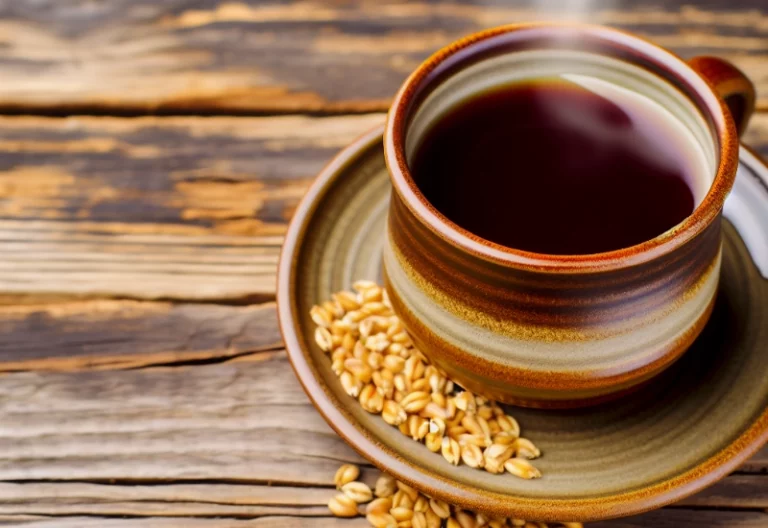
Chicory Coffee: What It Is, How It Tastes and How to Brew It

Contents
Chicory coffee is the closest thing to coffee that doesn’t come from a coffee plant. It’s made from a roasted root, it brews dark, it tastes bitter and toasty, and it has no caffeine. You can drink it on its own or mix it with regular coffee, which is how most of the world has used it for the last two hundred years. Below you’ll find what it is, where it came from, what it does (and doesn’t) do for your health, and how to brew it. If you’re weighing it against other coffee alternatives, this should give you enough to decide.
What is Chicory Coffee
Chicory coffee is made from the root of the chicory plant (Cichorium intybus), the same plant that gives us the blue roadside flowers and, in a different variety, endive and radicchio. The root is dried, roasted and ground, then brewed like coffee grounds.
The result is dark brown and smells a lot like coffee. The taste is woody and a little nutty, with a bitterness that’s sharper than coffee’s but without the acidity. On its own it’s thinner-bodied than coffee, which is why it’s so often blended with it. It’s also why chicory has a reputation as a “stretcher”: historically it was added to make expensive coffee go further.
People drink it today for two main reasons. It’s caffeine-free, and the root is rich in inulin, a soluble fiber that feeds gut bacteria.
History of Chicory (Root) Coffee
Chicory became a coffee substitute whenever coffee got scarce or expensive, which happened a lot in the 19th century:
- Early 1800s, France: Napoleon’s Continental Blockade cut France off from imported coffee, and roasted chicory filled the gap. The French kept drinking it after the blockade ended.
- The rest of the 1800s: Across Europe, roasted chicory was sold as a cheap extender to mix into coffee, especially in hard times.
- The American Civil War: The Union blockade of New Orleans cut off coffee shipments, and the city leaned on chicory the way the French had. The habit stuck, and coffee with chicory is still the New Orleans style today.
- Elsewhere: Chicory blends remain common in parts of India, where South Indian filter coffee is often cut with it, and in Belgium and France.
Chicory Root Granules vs. Chicory Coffee Beans
You’ll see chicory sold in two forms, and they’re not the same drink.
Chicory Root Granules
- These are just the root, roasted and broken into coarse granules about the size of sugar crystals.
- They contain no coffee, so the drink has no caffeine at all.
- You brew them like ground coffee: French press, drip machine, percolator or a pan on the stove.
- Expect something that looks like coffee and smells close to it, but tastes woodier and nuttier.
Chicory Coffee Beans
- The name is misleading: chicory does not produce beans like the coffee plant. “Chicory coffee” bags usually contain ground coffee mixed with roasted chicory root.
- The chicory adds body and a bittersweet edge, and it means less coffee per scoop.
- Because there’s real coffee in it, the drink has caffeine, just less than straight coffee.
So check the label. Pure chicory granules are for cutting out caffeine completely; a coffee-and-chicory blend is for cutting back.
Benefits of Chicory Coffee
Most of chicory’s benefits come from two facts: it has no caffeine, and the root contains a lot of inulin[1].
- No caffeine: Pure chicory is a reasonable swap if caffeine makes you jittery, keeps you up at night or is something you’re cutting back on during pregnancy.
- Gut health: Inulin is a prebiotic fiber, meaning it feeds the bacteria in your large intestine. How much reaches your cup depends on the product and how you brew it, but it’s the main reason chicory gets recommended for digestion.
- Blood sugar: Some studies suggest inulin can blunt blood sugar spikes after meals. The effect is modest, and it’s not a substitute for any treatment.
- Less acid: Chicory coffee is less acidic than regular coffee, so people with heartburn or a touchy stomach often tolerate it better.
- Liver and antioxidants: Chicory root contains polyphenols, and there’s early, mostly animal research on liver protection. Interesting, but not a reason to drink it on its own.
- Price: Roasted chicory is usually cheaper than good coffee, and it goes further.
One caution: inulin is a FODMAP. If you have irritable bowel syndrome (IBS), chicory can cause bloating and gas, so start with a small amount. And if you have a health condition or take medication, it’s worth checking with your doctor before making it a daily habit.
Popular Chicory Coffee Brands
Café du Monde
Café du Monde is the name most people know, thanks to its coffee stand in the French Market in New Orleans, open since the 1860s. The yellow-orange can on supermarket shelves is its Coffee and Chicory: a dark roast coffee blended with roasted chicory root. It’s strong and bitter if you drink it black.
At the stand it’s served as café au lait, half coffee and half hot milk, and that’s still the best way to drink it at home. The milk softens the chicory’s bite and brings out its chocolatey side. Since it’s a coffee blend, it does contain caffeine. The company also sells a decaf version.
Teeccino
Teeccino is a different kind of product. It’s a caffeine-free herbal coffee with no coffee in it at all. The blends are built on roasted chicory and carob, with ingredients like barley, dates, figs and almonds depending on the flavor. A few points if you’re thinking of trying it:
- Taste: Roasty and a little sweet, with cocoa notes from the carob. It’s smoother and less bitter than straight chicory.
- Brewing: It comes ground (for a French press, drip machine or espresso maker) and in tea-style bags you steep for a few minutes.
- Flavors: There’s a wide range, from plain dark roast to mocha, vanilla and dandelion versions.
- Who it suits: People who want a coffee ritual with zero caffeine and lower acidity. Some blends contain barley, so they aren’t gluten-free. Check the label if that matters to you.
How to Make Chicory Coffee
Chicory Coffee Recipe
This is the New Orleans-style version: coffee and chicory brewed together. It’s stronger than most people make coffee, which is deliberate, since it’s meant to stand up to milk.
Ingredients
- 1/2 cup ground coffee beans
- 1/4 cup ground chicory root
- 3 cups water
Instructions
- Mix the ground coffee and chicory in a bowl.
- Bring the water to a boil in a saucepan.
- Stir in the coffee-chicory mix and take the pan off the heat.
- Cover and steep for about 5 minutes.
- Strain through a fine-mesh sieve, or pour everything into a French press and plunge.
- Serve hot.
That makes about three cups. Drink it black if you like it bitter, but it’s better with hot milk and a little sugar. If you want to drop the caffeine, use 1/3 cup of chicory alone with the same amount of water.
Chicory Coffee Cold Brew
Chicory cold brews well. Steeping it cold pulls out less bitterness, so you get a smoother, slightly sweet concentrate that works over ice with milk.
- Use coarsely ground chicory root, or a coarse coffee-chicory blend.
- Put it in a jar or pitcher.
- Add cold filtered water at about 1 part chicory to 4 parts water.
- Stir so all the grounds are wet.
- Cover and leave it at room temperature for 12 to 24 hours.
- Strain through a coffee filter or a fine-mesh sieve.
- Dilute the concentrate with water or milk to taste, roughly half and half to start.
Why bother? It’s less bitter and less acidic than hot-brewed chicory, and a jar of concentrate keeps in the fridge for about a week, so your morning cup takes ten seconds.
Chicory Root Coffee Substitute
Roasted Chicory Root
If you want to quit coffee rather than just cut back, pure roasted chicory root is the simplest substitute. It’s earthy and slightly sweet, and it has the dark color and roasted smell that make the switch easier. It won’t fool a serious coffee drinker, but it scratches the same itch.
The reasons to drink it are the ones covered above: no caffeine, plenty of inulin and some polyphenols. Brewing it is easy.
Ingredients
- Roasted Chicory Root Granules
- Water
Instructions
- Use 1 tablespoon per 6 ounces of water.
- Boil the water and add the roasted chicory root granules.
- Allow the mixture to steep for 3-5 minutes, then strain and enjoy.
Chicory goes stronger than coffee for the same amount, so if the first cup is too harsh, use less rather than steeping for less time. A few other ways to use it:
- Chicory tea: Steep a teaspoon of granules in hot water like a loose tea for a lighter drink.
- Chicory latte: Make a strong cup and top it with steamed, frothed milk.
- In smoothies: A spoonful of brewed, cooled chicory adds a coffee-ish note to a banana or chocolate smoothie.
Chicory Coffee Blends
Chicory is rarely sold alone. Most caffeine-free “herbal coffees” use it as the base and add other roasted ingredients like barley, carob, dandelion root or dates to round it out.
- Flavor: Chicory brings bitterness and depth. Carob and dates add sweetness, and barley adds a toasted, cereal note. Blends taste more balanced than straight chicory.
- Fiber: You still get chicory’s inulin, plus whatever the other ingredients add.
- Caffeine: Herbal blends are caffeine-free. Coffee-and-chicory blends are not, so read the label.
You can also make your own blends at home. Two easy ones:
Chicory Mocha Blend
- Roasted chicory root
- Cocoa powder
- Steamed milk
- A touch of honey
Spiced Chicory Latte
- Roasted chicory root
- Warm spices (cinnamon, nutmeg, and cardamom)
- Frothed milk
- A sprinkle of cinnamon on top
For either one, brew a strong cup of chicory, stir in the cocoa or spices while it’s hot, then add the milk.
Is Chicory Coffee Right for You?
Taste and Flavor
Here’s what to expect from the first cup:
- Bitterness: More bitter than coffee, in a woody way rather than a burnt one. Milk helps a lot.
- Earthiness: There’s a root-vegetable depth to it that coffee doesn’t have.
- Sweetness: Under the bitterness there’s a caramel-like sweetness from the roasting.
- Body: Pure chicory is thinner than coffee. Blends with coffee or carob feel fuller.
Health Considerations
- Digestion: The inulin is good for most guts, but it can cause gas and bloating, especially with IBS. Start small.
- Acid reflux and GERD: Lower acidity and no caffeine make chicory easier on reflux than coffee for many people.
- Blood sugar: Possibly helpful, but the evidence is modest. If you have diabetes, treat it as a coffee swap, not a treatment.
- Allergies: Chicory is in the same plant family as ragweed, so if you react to ragweed, try a little first.
Conclusion
Chicory coffee is worth trying if you want to cut caffeine without giving up the ritual of a dark, bitter morning cup. If you’re easing off coffee, start with a coffee-and-chicory blend like Café du Monde with plenty of milk. If you want no caffeine at all, go for pure roasted granules or a chicory-based herbal coffee like Teeccino. Either way, give it a week before you judge it. It tastes better once you stop expecting coffee.