Natural Adrenal Fatigue Coffee Alternatives

Contents
If you’re tired all the time, stressed, and leaning on coffee to get through the day, cutting back on caffeine is a sensible step, and there are good natural coffee alternatives to make it easier. This post covers what “adrenal fatigue” does and doesn’t mean, how caffeine affects stress hormones, which drinks are worth swapping in, and the lifestyle changes that matter more than any drink.
What is Adrenal Fatigue and How Does Coffee Affect It?
Understanding Adrenal Fatigue
“Adrenal fatigue” is a term used mostly in alternative medicine. The idea is that long-term stress wears out the adrenal glands so they can’t make enough cortisol, leading to tiredness, body aches, poor sleep, cravings and getting ill often.
The honest picture is that adrenal fatigue isn’t a recognized medical diagnosis. Endocrinologists haven’t found good evidence that ordinary stress exhausts the adrenal glands, and reviews of the research haven’t shown a consistent pattern of cortisol problems in people with these symptoms1. There is a real, serious condition where the adrenals don’t make enough hormones (adrenal insufficiency, including Addison’s disease), but it’s rare, and it needs proper testing and treatment.
None of this means the symptoms aren’t real. Persistent exhaustion is miserable, and it can have many causes, including thyroid problems, anemia, depression, sleep apnea and chronic stress. If you’ve felt run down for weeks, see a doctor and get checked before assuming it’s your adrenals.
What the adrenal fatigue approach gets right is the advice: reduce stress, sleep more, eat well and don’t use caffeine to paper over exhaustion. That’s worth doing regardless of what you call the problem.
How Coffee Affects Stress Hormones
Caffeine is a stimulant, and it does affect stress hormones. A cup of coffee raises cortisol and adrenaline for a while, especially in people who don’t drink it often. Regular drinkers build up a partial tolerance, so the effect is smaller for them, but it doesn’t disappear entirely2.
For someone who is already stressed and sleeping badly, that matters in two ways:
- It masks tiredness: Coffee lets you push through on little sleep, which can keep you in a cycle of late nights, early caffeine and afternoon crashes.
- It can make anxiety and sleep worse: Caffeine has a half-life of about five hours, so an afternoon cup is still in your system at bedtime. Some people also find it makes them more jittery and on edge when they’re already stressed.
Cutting back, or switching to lower-caffeine and caffeine-free drinks, is a reasonable experiment. A few options:
- Herbal teas: Chamomile is a gentle, popular evening tea. Holy basil (tulsi) is used as an adaptogen in Ayurveda. Licorice root is often recommended for adrenal support, but it can raise blood pressure and lower potassium3, so it’s not one to drink daily without checking with a doctor.
- Decaf coffee: If you love the taste of coffee, decaf gives you that with only a few milligrams of caffeine per cup.
- Golden milk: Warm milk with turmeric and spices. Caffeine-free, comforting, and a good evening drink.
Symptoms People Call Adrenal Fatigue
How Coffee Can Make These Symptoms Worse
The symptoms usually listed under adrenal fatigue are tiredness that sleep doesn’t fix, trouble getting going in the morning, an energy dip in the afternoon, poor sleep, feeling overwhelmed by stress, and craving salt or sugar. Coffee can make some of these worse, even if it isn’t the cause.4
- Cortisol rhythm: Cortisol naturally peaks shortly after you wake up and falls through the day. Heavy coffee drinking, especially later in the day, adds extra cortisol and adrenaline spikes on top of that pattern.
- The crash cycle: As caffeine wears off, many people feel a dip and reach for another cup. Over time you can end up relying on coffee just to feel normal, and feel worse without it.
- Sleep: This is the big one. Caffeine can delay sleep and reduce deep sleep, even when you don’t notice it. Poor sleep feeds directly into daytime fatigue, which feeds more coffee drinking.
- Nutrients: You’ll often read that coffee depletes nutrients like B vitamins and magnesium. Caffeine does slightly increase how much of some minerals you lose in urine, but for most people with a decent diet the effect is small.
If coffee is the thing holding your days together, that’s a sign to look at sleep and stress, not just at the coffee.
Exploring Natural Adrenal Fatigue Coffee Alternatives
Adaptogenic Herbs and Teas
Ashwagandha and holy basil are the adaptogens most often suggested for stress. Ashwagandha has the most research behind it, with some small trials suggesting it may lower perceived stress and improve sleep5. Holy basil is mostly traditional use. Both are usually taken as a tea or a powder stirred into warm milk. Neither is a stimulant, so they won’t replace coffee’s kick. Ashwagandha isn’t recommended in pregnancy and can interact with thyroid medication, so check with your doctor first.
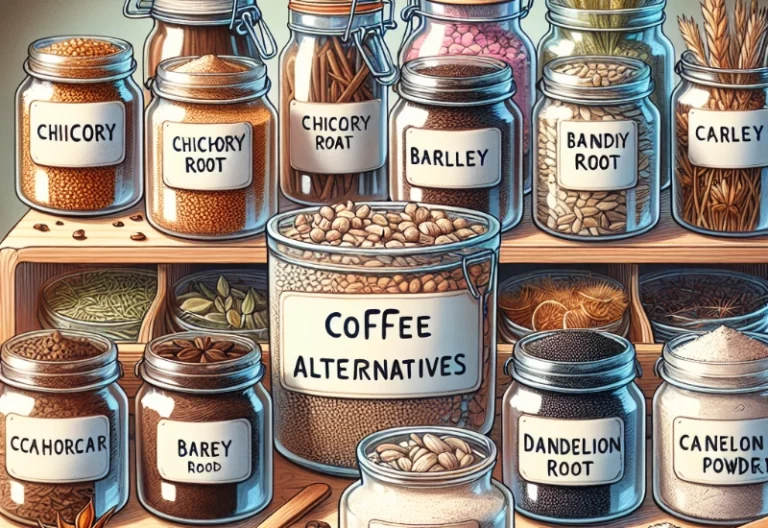
Chicory Root Coffee
Chicory root coffee is the most coffee-like caffeine-free option. It’s dark, roasted and bitter, and you brew it the same way, so it keeps your morning routine intact. It also contains inulin, a fiber that feeds gut bacteria (and can cause bloating if you have IBS). If quitting caffeine outright feels like too much, start by mixing chicory with your regular coffee and gradually shift the ratio.
Golden Milk and Turmeric Lattes
Golden milk is milk (dairy or plant) warmed with turmeric, cinnamon, ginger and a pinch of black pepper. It’s caffeine-free and soothing, which makes it a good replacement for an afternoon or evening coffee. Turmeric’s anti-inflammatory reputation comes mostly from lab studies of concentrated curcumin, so think of it as a comforting drink rather than a treatment.
Lifestyle Changes That Help With Stress and Fatigue
Stress Management Techniques
These will do far more for how you feel than any drink:
- Mindfulness and meditation: Even ten minutes a day can lower how stressed you feel. Apps and guided recordings make it easier to start.
- Breathing exercises: Slow, deep breathing, such as breathing out for longer than you breathe in, activates the body’s relaxation response. It’s useful in the moment when stress spikes.
- Exercise: Regular walking, yoga, swimming or dancing help with mood and sleep. If you’re exhausted, keep it gentle at first; pushing too hard can leave you more tired.
- Workload: Prioritizing, saying no and delegating where you can. Not glamorous, but often the root of the problem.
- Food: Regular meals with protein, vegetables and whole grains keep energy steadier than coffee and snacks. Leafy greens, nuts and citrus fruit are good sources of magnesium and vitamin C.
Sleep Habits That Restore Energy
Sleep is where most people get the biggest improvement in energy:
- Keep a consistent schedule: Going to bed and getting up at the same time every day, weekends included, steadies your body clock and your natural cortisol rhythm.
- Make your bedroom work for sleep: Dark, cool and quiet. Keep work out of it if you can.
- Cut screens before bed: Phones and laptops keep your brain switched on. Put them away 30 to 60 minutes before bed.
- Set a caffeine cut-off: If you still drink coffee, stop by early afternoon and switch to caffeine-free drinks after that.
Bottom Line
Whether or not “adrenal fatigue” is the right label, if you’re exhausted and running on coffee, it’s worth getting checked by a doctor and then cutting back on caffeine gradually. Swap your later cups first. Chicory gives you the closest coffee replacement, golden milk and herbal teas work well in the evening, and decaf keeps the taste you’re used to. Cacao-based coffee alternatives are another option for the morning, though they contain a little caffeine. But the drink is the easy part. Sleep and stress are where the real change happens.
Sources
-
Adrenal fatigue does not exist: a systematic review, BMC Endocrine Disorders, 2016 ↩
-
Caffeine Stimulation of Cortisol Secretion Across the Waking Hours in Relation to Caffeine Intake Levels, Psychosomatic Medicine, 2005 ↩
-
The association between consistent licorice ingestion, hypertension and hypokalaemia: a systematic review and meta-analysis, Journal of Human Hypertension, 2017 ↩
-
Clinical perspective on stress, cortisol and adrenal fatigue, Advances in Integrative Medicine, 2014 ↩
-
Does Ashwagandha supplementation have a beneficial effect on the management of anxiety and stress? A systematic review and meta-analysis of randomized controlled trials, Phytotherapy Research, 2022 ↩