Cacao Coffee Alternatives: Brewed Cacao, Recipes and Tips

Contents
Cacao coffee alternatives are drinks made from cacao beans instead of coffee beans: brewed ground cacao, cacao powder whisked into hot water or milk, or blends of the two. They taste like a light, bitter, unsweetened dark chocolate rather than coffee, and they have much less caffeine. If you want a morning drink that still feels like a treat but won’t leave you wired, cacao is one of the better choices. Here’s what it is, how it differs from cocoa, what it can and can’t do for you, and how to make it.
What is Cacao Coffee?
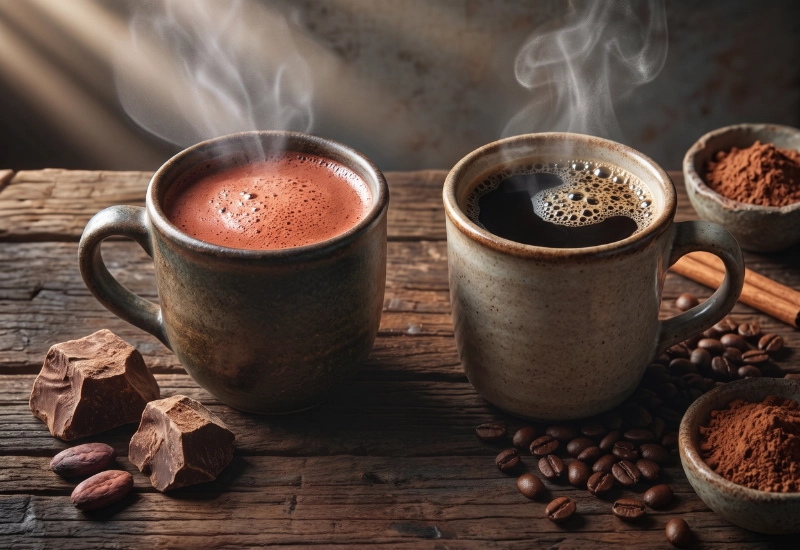
“Cacao coffee” usually means brewed cacao: cacao beans that are fermented, roasted and ground to a coffee-like texture, then brewed in a French press or drip machine like coffee. The result is thin and dark, more like coffee or tea than hot chocolate, with a bitter cocoa flavor and a chocolatey smell. Brands such as Crio Bru sell it ready-ground.
The term is also used for cacao powder drinks and for coffee mixed with cacao (basically a mocha). It’s worth knowing which you’re getting. Brewed cacao and cacao powder drinks are low in caffeine but not caffeine-free: cacao contains a small amount of caffeine plus theobromine, a milder stimulant. A cup of brewed cacao has far less caffeine than a cup of coffee. Anything with coffee in it, of course, has the full dose.
Cacao vs. Cocoa
Both come from the beans of the cacao tree. The difference is mostly in processing, and the labels aren’t always used consistently.
Cacao
- Usually refers to less processed products from the cacao bean, often sold as “raw”.
- The beans are fermented, dried and then processed at lower temperatures, sometimes pressed to remove part of the fat (cacao butter). The remaining solids are ground into cacao powder.
- The flavor is more bitter and sharper than cocoa, with more acidity.
- Lower processing temperatures may preserve more flavanols, the antioxidant compounds that cacao research focuses on. The “superfood” label is marketing, but cacao does contain flavanols, magnesium, iron and fiber.
- Products include cacao nibs, cacao powder and cacao butter.
Cocoa
- Usually refers to beans roasted at higher temperatures and processed further.
- Roasting and processing reduce some of the flavanol content.
- Dutch-process cocoa is treated with an alkali to reduce acidity, giving a darker color and a smoother, milder flavor. Alkalizing also lowers flavanols noticeably.
- Cocoa is the standard for baking, chocolate and hot chocolate mixes, and most people find it more pleasant to drink than raw cacao.
- Products include cocoa powder, cocoa butter and cocoa mass.
In short: cacao is less processed and has a bit more of the good compounds, cocoa is milder and cheaper. Natural (non-alkalized) cocoa powder sits in between and works fine for most of the drinks below.
Benefits of Cacao Coffee Replacement
Health Benefits
Cacao’s health claims are better studied than most coffee alternatives’, though many studies used concentrated cocoa flavanol supplements rather than a cup of cacao.
- Heart health: Cocoa flavanols have been shown in some studies to improve blood flow and modestly lower blood pressure. The effect from everyday drinks is likely smaller.
- Antioxidants: Cacao is rich in polyphenols, especially flavanols.
- Mood: Cacao contains theobromine and small amounts of other compounds linked to mood. Most people find a warm chocolate drink pleasant, and that’s probably most of the effect.
- Gentle energy: Theobromine is a milder, longer-lasting stimulant than caffeine, and combined with cacao’s small amount of caffeine it gives a gentle lift without the jitters many people get from coffee.
- Focus: Some research links cocoa flavanols to short-term improvements in cognitive performance, but the evidence is still limited.
Theobromine and caffeine can still affect sleep in sensitive people, so cacao is a better morning or early afternoon drink than an evening one. Cacao is also toxic to dogs, so keep it out of reach.
Flavor Range
Brewed cacao is bitter, dark and slightly fruity or nutty, depending on where the beans come from. Beans from different regions taste noticeably different, just as coffee beans do. Plain cacao powder in hot water is more intense and earthy, and without sugar or milk it’s an acquired taste.
Most people find it easiest to start with milk and a little sweetener. Cinnamon, vanilla, a pinch of salt or a little chili all suit it. If you want something closer to coffee, mix brewed cacao with chicory or a little real coffee.
Different Ways to Prepare Cacao Coffee Substitute
Cacao Coffee Recipes
Brewed cacao works like coffee: use about 2 to 3 tablespoons of ground cacao per 8 ounces of water just off the boil and steep in a French press for 5 to 8 minutes. It takes longer than coffee to extract. Some ideas from there:
- Iced cacao: Brew cacao at double strength, let it cool, and pour it over ice with milk. Our iced Crio Bru recipe walks through it step by step.
- Mocha cacao latte: Whisk a tablespoon of cacao powder into a splash of hot water to make a paste, add steamed milk and sweeten to taste. For a classic mocha, add a shot of espresso, but then it’s back to full caffeine.
- Cacao cold brew: Steep ground cacao in cold water in the fridge for 12 to 24 hours, then strain. It comes out smoother and less bitter than hot-brewed.
Variations from Around the World
Cacao was a drink long before it was a candy bar, and several traditional versions are still made today:
- Mesoamerican cacao: The Maya and later the Aztecs drank cacao mixed with water, often with chili, vanilla or achiote, and frothed it by pouring it between vessels. It was bitter and unsweetened, and it had ceremonial and social importance.
- Mexican hot chocolate and champurrado: Chocolate with cinnamon and sugar, beaten until frothy. Champurrado is thickened with corn masa.
- Spanish chocolate a la taza: Very thick drinking chocolate, traditionally served with churros.
- Italian cioccolata calda: Similar: thick, rich hot chocolate served in small cups.
Where to Find Quality Cacao for Coffee Alternatives
- Health food and specialty stores: These usually stock raw cacao powder, cacao nibs and sometimes brewing cacao. Check the label for 100% cacao with nothing added, and note whether it’s raw or roasted.
- Online: The widest range of brewing cacao is online. Look for the origin of the beans on the label; single-origin products tell you more about what you’re getting.
- Certifications: If ethical sourcing matters to you, look for Fairtrade, Rainforest Alliance or organic certification, or brands that are specific about which farms or cooperatives they buy from. “Ethically sourced” on its own, without details, doesn’t mean much.
Sustainability and Fair Trade in Cacao Coffee Production
The cacao industry has serious, well-documented problems. Most of the world’s cacao is grown by smallholder farmers in West Africa, especially Côte d’Ivoire and Ghana, and many of them earn very little. Child labor in cacao farming has been widely reported for years, and cacao expansion has been linked to deforestation.
Certifications like Fairtrade and Rainforest Alliance aim to address this with minimum prices, premiums and farm standards. They don’t solve everything, but they’re better than nothing. Some smaller brands buy directly from farmers and pay above market prices. Agroforestry, where cacao grows under shade trees alongside other crops, is generally better for biodiversity than full-sun plantations.
If you drink cacao every day, it’s worth paying a bit more for a brand that’s transparent about where its beans come from.
Should You Swap Coffee for Cacao?
Cacao is a good choice if you want to cut caffeine without dropping it to zero, and you like dark chocolate. Start with brewed cacao and milk, or a cacao latte made with natural cocoa powder, and sweeten lightly. Drink it in the morning rather than late at night. It won’t taste like coffee, but for many people that’s the point.