Ceremonial Cacao vs Coffee: Caffeine, Theobromine and Energy
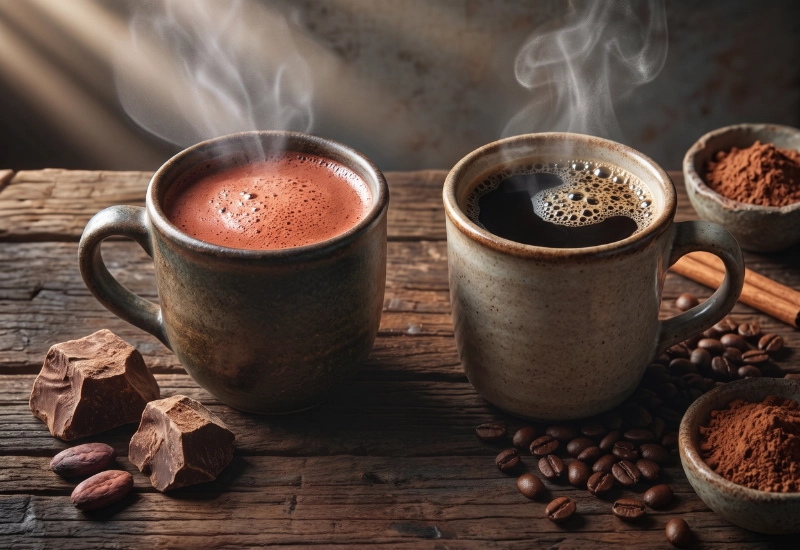
Coffee wakes you up fast and wears off fast. Ceremonial cacao gives a smaller, slower lift that many people find calmer. The difference comes down to two related stimulants: caffeine, which coffee has a lot of, and theobromine, which is the main one in cacao.
Ceremonial cacao is minimally processed whole cacao, usually sold as a block of paste that you melt into hot water or milk. It’s thicker and more bitter than hot chocolate, and it’s marketed (often with words like “heart-opening”) as a gentler way to start the day.
So is it a real replacement for coffee, or just expensive hot chocolate? It depends what you want from your morning cup. Here’s how the two compare.
Contents
The Caffeine Problem: Sharp Peaks and Steep Crashes
Coffee’s effect comes almost entirely from caffeine.
Caffeine works by blocking adenosine receptors in the brain. Adenosine builds up while you’re awake and makes you feel sleepy. With the receptors blocked, you don’t feel that tiredness, at least for a while.
- The upside: It works quickly and reliably. Alertness and concentration go up within half an hour or so, and caffeine also raises adrenaline, which helps with short, demanding tasks.
- The downside: Caffeine’s half-life is around five hours on average, though it varies a lot from person to person. As it wears off, the tiredness it was masking comes back, which many people feel as an afternoon slump. Higher doses can also cause anxiety and jitters, and caffeine in the afternoon can affect sleep that night.
The Cacao Solution: The Power of Theobromine
Ceremonial cacao does contain some caffeine, but a typical serving has much less than a cup of drip coffee. The exact amount depends on the cacao and the serving size. Its main stimulant is theobromine, the compound that gives chocolate its mild lift.
A serving of ceremonial cacao has several times more theobromine than caffeine. If you want to compare different types and brands, see our guide to cacao coffee alternatives.
How Theobromine Changes the Experience
Caffeine and theobromine are chemically very similar, but they don’t feel the same:
- Brain vs. body: Caffeine acts mainly on the brain. Theobromine is a much weaker stimulant of the central nervous system, but it does relax and widen blood vessels and has a mild effect on the heart. That may be why people describe the cacao feeling as warm or “in the body” rather than buzzy.
- Slower curve: Theobromine stays in the body longer than caffeine, with a half-life of roughly 7 hours or more. So the effect is gentler and fades more gradually. You’re less likely to notice a sharp crash, though a big serving late in the day can still affect sleep for some people.
- Fewer jitters: Because theobromine is a weaker stimulant, most people don’t get the racing heart or anxiety they might from strong coffee. That makes cacao a reasonable option if you’re sensitive to caffeine, though it isn’t caffeine-free.
A Nutritional Powerhouse
Cacao and coffee are also different nutritionally. Coffee is a major source of antioxidant polyphenols in most people’s diets, but it contains little else in the way of nutrients.
Cacao has more to offer per serving:
- Magnesium: Cacao is one of the richer food sources. Magnesium is needed for muscle and nerve function.
- Iron, potassium and zinc: Present in useful amounts, though a single cup won’t cover your daily needs.
- Flavanols: Cacao’s own type of polyphenol, linked in some studies to better blood vessel function and blood flow. Coffee’s polyphenols are mainly a different kind (chlorogenic acids).
- Fat: About half of ceremonial cacao is cacao butter, which makes the drink rich and filling. It also means a serving has a fair number of calories, which is worth knowing if you’re swapping it for black coffee.
Which Should You Choose?
Neither is better overall. They do different jobs.
If you need to be sharp quickly, for a deadline, an early meeting or a long drive, coffee is hard to beat.
If you want a calmer start to the day, or caffeine makes you anxious, ceremonial cacao is the better pick. It’s also a sensible way to cut down on caffeine, since you still get a little, which can soften withdrawal.
The Transition Strategy
You don’t have to quit coffee all at once. An easy first step is a homemade mocha: melt a serving of ceremonial cacao into your usual coffee. Over a few weeks, use less coffee and more cacao until you’re drinking cacao on its own. The cacao covers some of the taste and ritual you’d otherwise miss, and you cut the caffeine gradually.
Ready to cut back further? Our guide to the best coffee alternatives covers more ways to reduce your caffeine intake.