Dandelion Root Coffee: Taste, Benefits and How to Make It

Contents
Dandelion root coffee is roasted, ground dandelion root brewed like coffee. It’s caffeine-free, low in acid and tastes earthy and a little sweet, so it’s a good coffee alternative if you want to cut caffeine but keep a dark, warm drink in the morning. Here’s what it is, what it can and can’t do for you, and how to make it from scratch.
What is Dandelion Root Coffee?
Dandelion root coffee, also called dandelion coffee or sometimes dandelion tea, is made from the roasted roots of the common dandelion. It’s a caffeine-free alternative to traditional coffee, and people have been drinking it as a coffee substitute for a long time, particularly in Europe and North America when coffee was scarce or expensive.
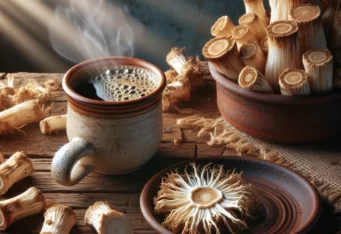
The roots are dug up, scrubbed, chopped, roasted and ground. Roasting caramelizes some of the natural sugars and starches in the root, which gives the drink its dark color and roasty, slightly sweet flavor. It’s lighter and less bitter than coffee or chicory, with a nutty finish. On its own it can taste a bit thin, which is why it’s often blended with chicory or roasted grains. It works hot or iced, and it’s good with milk.
Benefits of Dandelion Root Coffee
The clearest benefit is the lack of caffeine: no jitters, no crash and no effect on your sleep.[1]
Dandelion root has a long history of traditional use as a liver tonic, and early lab and animal research is promising. Good studies in people are still lacking, though, and your liver already does its own detoxifying, so enjoy dandelion root coffee as a flavorful, caffeine-free drink rather than a health treatment.
It also has a low acidity level, which makes it easier on the stomach than coffee for many people, including those with heartburn.
The root contains inulin, a prebiotic fiber that feeds gut bacteria. That’s good for most people, but it can cause gas and bloating if you’re sensitive, especially with IBS.
As for flavor, it’s satisfying but won’t replace coffee’s kick. It’s best thought of as a pleasant, gentle drink in its own right and one of the more convincing herbal beverages for coffee drinkers. Dandelion is in the same plant family as ragweed, so if you have that allergy, try a small amount first. If you take medication, especially diuretics, check with your doctor before drinking it daily.
How to Make Dandelion Root Coffee
- Dig up fresh dandelion roots from a place you know hasn’t been sprayed with weedkiller, and away from roads. Autumn and early spring are the best times, when the roots are thickest. Use a fork and dig deep, since the taproots are long.
- Scrub the roots well under running water to get the soil off. You don’t need to peel them. Chop them into small, even pieces, roughly 1/2 inch.
- Roast the pieces on a baking sheet at about 300–350°F (150–175°C), stirring occasionally, until they’re dark brown and dry all the way through and smell roasty. This usually takes 30 minutes to an hour. A longer, darker roast gives a stronger, more coffee-like flavor.
- Let them cool, then grind them in a coffee grinder. A coarse grind works for a French press or saucepan, finer for a drip machine.
To brew, simmer about 1 tablespoon of ground root per cup of water for 10 minutes, then strain. Or steep it in a French press for 5 to 10 minutes. If you’d rather skip the digging, roasted dandelion root is easy to buy ready-made, either ground or in tea bags.
Dandelion Root Coffee Alternatives
If dandelion isn’t for you, there are plenty of other options.
Chicory coffee is the closest relative. It’s darker, more bitter and fuller-bodied than dandelion, and also caffeine-free. Many blends combine the two.
Herbal teas like peppermint, chamomile and rooibos are lighter options. Peppermint is fresh and cooling (though it can aggravate heartburn), chamomile is mild and good in the evening, and rooibos is naturally sweet and caffeine-free.
For something creamy, try a turmeric latte or a matcha latte. A turmeric latte is warm and gently spicy, and caffeine-free. Matcha is grassy and slightly sweet, but it does contain caffeine, so it’s for cutting back rather than quitting.
Should You Try Dandelion Root Coffee?
If you want a caffeine-free hot drink that’s easy on the stomach and still feels a bit like coffee, yes. Start with store-bought roasted root, brew it strong and add milk. If you find it too mild, try a dandelion and chicory blend. And if you enjoy it, roasting your own from the garden is cheap and easy.