What Is Lupine Coffee? A Caffeine-Free Legume Coffee
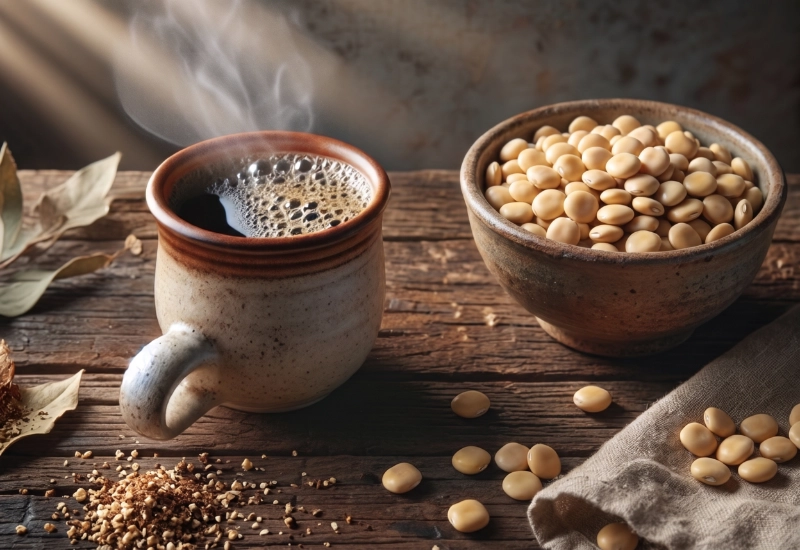
Lupine coffee is made from roasted lupin seeds, a legume related to peas and beans. It’s caffeine-free, low in acid and brews into a dark, nutty cup with more body than most coffee substitutes. Chicory and dandelion are still the better-known options, but lupine is turning up more often on shop shelves.
It isn’t new. Roasted lupin was used as a coffee substitute in parts of Europe, Germany in particular, back when real coffee was expensive or hard to get. What’s changed is that people now drink it by choice rather than out of necessity.
If you want a caffeine-free morning drink, something easy on the stomach, or a beverage that’s less acidic than coffee, it’s worth a look. Here’s what you need to know, including one important allergy warning.
Contents
What Are Lupine Beans?
Not the tall lupine flowers in your garden. Lupine coffee is made from the seeds of sweet lupin varieties, mainly white lupin (Lupinus albus) and narrow-leafed or blue lupin (Lupinus angustifolius). These have been bred to be low in the bitter alkaloids that make wild and ornamental lupins unsafe to eat.
Lupins have been grown for food for thousands of years around the Mediterranean, and a related species is still a staple in the Andes. They’re a hardy crop: they grow in poor, sandy soil and, like other legumes, fix nitrogen, which improves the soil for the next crop.
To make lupine coffee, the dried seeds are roasted until dark and then ground, much as coffee beans are.
Why People Are Switching to Lupine Coffee
Mushroom coffees often still contain real coffee. Lupine is for people who want a dark, full-bodied morning drink with no caffeine at all. Here’s what sets it apart.
1. The Beans Are Naturally High in Protein
Most coffee alternatives, like chicory or barley, are mostly carbohydrate and fiber. Lupin is a legume, and sweet lupin seeds can be up to around 40% protein. A brewed cup extracts only a small part of that, though, so think of lupine coffee as a flavorful drink, not a protein source.
2. 100% Caffeine-Free (Not Just Decaf)
Decaf coffee still contains a little caffeine, usually a few milligrams a cup. That’s not much, but some very sensitive people notice it, especially in the evening. Lupin has no caffeine to begin with, so there’s no decaffeination process involved. You can drink it at 8:00 AM or 8:00 PM.
3. Low in Acid and Gentle for Many People
If you struggle with acid reflux, GERD or an easily upset stomach, coffee’s acidity is often part of the problem. Lupine coffee is naturally low in acid, and many people find it gentle on the stomach. Lupin is high in fiber, though, which can cause gas or bloating in some people, so start with a small cup. It makes a good addition to our list of Gut-Friendly Coffee Alternatives.
4. Eco-Friendly and Sustainable
Coffee is grown in the tropics and shipped around the world, and expanding coffee farms have been linked to deforestation in some regions. Lupins can be grown in temperate countries, often without irrigation, and as a legume they need little or no nitrogen fertilizer. That gives lupine coffee a reasonable claim to a smaller footprint, though, as with any product, it depends on where and how it’s grown and shipped.
What Does Lupine Coffee Taste Like?
Better than you might expect. Lupin seeds contain more oil and protein than grains or roots, and that gives the brew a fuller body than chicory or dandelion.
- The Flavor Profile: Nutty and slightly sweet, with notes like toasted almonds and caramel. It has very little of the bitterness or acidity of regular coffee.
- The Comparison: It’s less bitter than chicory, less earthy than mushroom coffee and thicker than roasted dandelion root.
It won’t fool someone who drinks their espresso black, but with milk it gets closer than most alternatives.
How to Brew Lupine Coffee
You don’t need any new equipment. Ground lupine behaves much like ground coffee.
- French Press: Probably the easiest method. Full immersion brings out the most body. Use 1-2 tablespoons per cup of hot water and steep for 4-5 minutes.
- Espresso Machine / Moka Pot: Finely ground lupine works in both, and makes a good base for caffeine-free lattes. Check that the product is ground fine enough for your machine.
- Drip Maker: Works fine. Just make sure the grind suits a standard drip filter.
If the first cup is weak, use more grounds rather than steeping much longer, which can make it taste flat.
Who Should Avoid Lupine Coffee?
Lupin is a legume in the same family as peanuts and soy. Lupin allergy is recognized as a food allergy (in the EU and UK it must be declared on labels), and people with a peanut allergy can react to lupin too. If you have a peanut or other legume allergy, speak to an allergist before trying it. Buy only products made from “sweet” lupin from reputable sellers, because bitter lupin varieties contain alkaloids that can be toxic. If you are pregnant or breastfeeding, check with your doctor first.
The Verdict
If you want a caffeine-free, low-acid morning drink that still has a roasted flavor and some body, sweet lupine is well worth trying, especially with milk. Many people find it gentle on the gut, and it’s a lower-input crop than coffee. Just check the allergy warning above first.