Matcha for Anxiety: Why It Feels Calmer Than Coffee
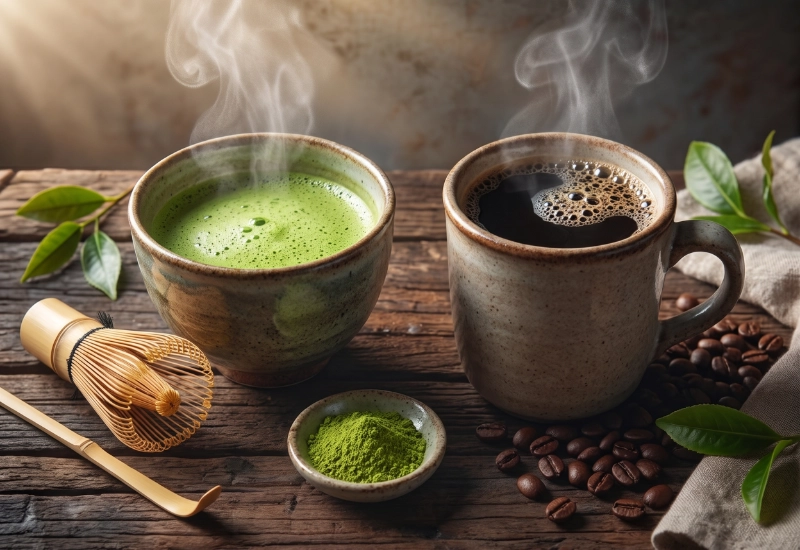
When work gets busy, most of us reach for another cup of coffee. If you’re prone to stress, that extra cup may not be helping.
Caffeine is a stimulant, and it prompts your body to release adrenaline and cortisol, the hormones behind the “fight or flight” response. If you’re already wound up, coffee can make anxiety, a racing heart and the afternoon crash worse, at least for sensitive people.
If you still want the energy but not the jitters, matcha is a good option to try. It has caffeine, but it tends to feel calmer than coffee, and there’s a reasonable explanation for why.
Contents
The Key Ingredient: L-Theanine
Matcha does contain caffeine, often about half as much as a standard cup of coffee, depending on how much powder you use. The reason it feels different comes down to an amino acid called L-theanine.
L-theanine is found almost only in the tea plant. Studies suggest it can increase alpha brain-wave activity, which is associated with a relaxed but alert state. Because matcha is the whole leaf ground into powder, you drink all of it rather than just what steeps out, so you get more L-theanine than from a cup of brewed green tea.
The Synergistic Effect
When caffeine and L-theanine are taken together, research suggests they work well as a pair, with L-theanine appearing to smooth out some of caffeine’s edgier effects, such as jitteriness.
Many people report a steadier, gentler lift than coffee gives. The caffeine keeps you alert, while L-theanine appears to promote relaxation. Effects vary from person to person, and the studies are mostly small, so it’s worth seeing how it works for you rather than expecting a dramatic difference.
Matcha vs. Coffee: The Energy Curve
As a rough illustration of how the two often feel (individual responses vary):
- Coffee: A quick rise to peak alertness, sometimes with a bit of jitteriness, and for some people a noticeable dip a few hours later that sends them back for another cup.
- Matcha: A slower, more gradual lift that many people describe as steadier, with a gentler come-down. Some feel little or no crash, though this varies.
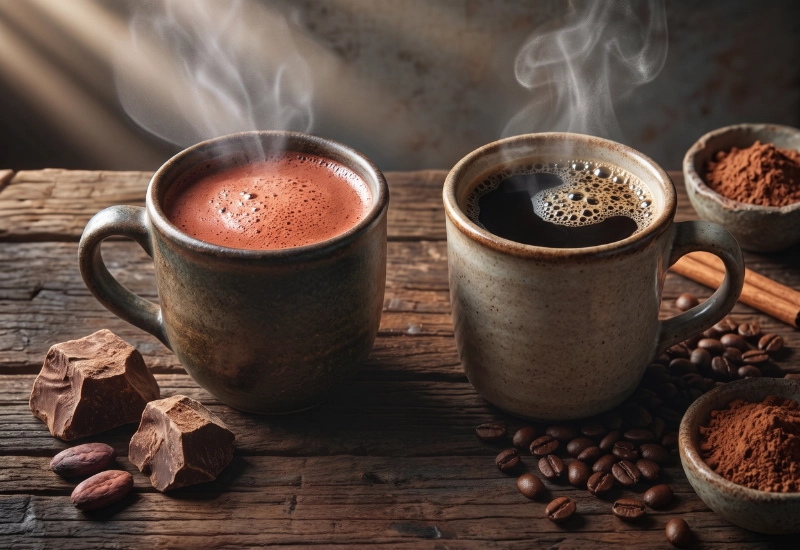
Part of the difference is simply dose: a typical matcha has less caffeine than a typical mug of coffee. Prefer a very different route to calm, steady energy? See how ceremonial cacao compares to coffee.
How to Choose the Right Matcha
Matcha is everywhere now, and a lot of what’s sold is bitter, dull powder. If you’re drinking it for calm, steady energy and for the taste, quality makes a real difference.
What to look for:
- Ceremonial grade over culinary grade: Culinary grade is meant for baking and smoothies and tastes astringent on its own. Ceremonial grade is usually made from younger, shade-grown leaves, which tend to be higher in L-theanine and taste sweeter and smoother. “Ceremonial” isn’t a regulated term, though, so price and origin tell you more than the label.
- Origin: Japan produces most of the well-regarded matcha, from regions like Uji, Kagoshima and Nishio.
- Color: Good matcha is a bright, vivid green. If the powder is dull, yellowish or brownish-green, it’s either stale or made from older, lower-quality leaves.
The Perfect Morning Ritual
Part of the appeal of switching is the routine. Sift a teaspoon of matcha into a bowl, add a splash of hot water (just under boiling, around 175°F), whisk until frothy, then top up with water or warm milk. It takes a couple of minutes, and that small pause is a calmer start to the day than gulping coffee on the way out.
If coffee tends to leave you jittery or anxious, a good matcha is a gentler way to get your focus. It still contains caffeine, though, so if you have an anxiety disorder or a heart condition, or you are pregnant, check with your doctor about your caffeine intake. Matcha is a calmer option, not a treatment.
Looking for more brews built around tea? Browse our tea substitutes for coffee.