When Coffee Isn’t Coffee: Drinks That Stand In for Your Cup

Contents
Plenty of drinks get called “coffee” without containing a single coffee bean: chicory coffee, barley coffee, dandelion coffee, mushroom coffee. Others, like matcha and yerba mate, aren’t pretending to be coffee at all but end up in the same spot in people’s mornings. This post is a quick tour of when coffee isn’t coffee: what these drinks are, what they can and can’t do for you, and how to make them a habit.
The Rise of Coffee Alternatives – Understanding Coffee Substitutes
When Coffee Isn’t Coffee
“Non-coffee coffees” are drinks built to look, smell and sometimes taste like coffee without using coffee beans. Most are made from roasted roots or grains, which develop the same dark color and toasty, bitter flavors when roasted. They’re not new: chicory and roasted grains were the standard substitutes whenever coffee was too expensive or unavailable, from Napoleon’s France to wartime Europe.
People reach for them now for different reasons. Some want to cut caffeine because of sleep, anxiety or pregnancy. Some find coffee hard on their stomach. Some just want variety. Whatever the reason, there’s now a wide range of coffee substitutes to choose from.
Coffee That Doesn’t Taste Like Coffee
Then there’s the other group: drinks that make no attempt to taste like coffee but fill the same role. A matcha latte, a turmeric latte, a chai or a cup of mate all give you a warm drink and a reason to pause in the morning. Some are made with roasted grains, others with herbs or spices. If you don’t miss the taste of coffee so much as the comforting ritual of a warm drink, this group is often easier to stick with than an imitation that reminds you of what you’re missing.
Health Benefits of Coffee Alternatives
The benefits depend a lot on which drink you pick, and the marketing often runs ahead of the evidence. Here’s a realistic version:
- Digestion: Chicory and dandelion root contain inulin, a prebiotic fiber that feeds gut bacteria. Roasted root drinks are also less acidic than coffee, which many people with a sensitive stomach find easier. Inulin can cause gas, though, so start small.
- Less or no caffeine: Caffeine is safe for most adults in moderate amounts, but too much can cause anxiety, poor sleep and a racing heart.[1] Root and grain coffees, rooibos and turmeric lattes are caffeine-free. Matcha and yerba mate are not: they contain caffeine, usually less per cup than coffee, so they’re a way to cut back rather than quit.
- Antioxidants: Many of these drinks contain plant compounds with antioxidant activity. Rooibos, matcha and mate are good examples. That’s a nice extra, but coffee is rich in antioxidants too, so it’s not much of a reason to switch.
- Adaptogens: Ashwagandha lattes and mushroom blends are sold for stress relief. There’s some early research on ashwagandha and stress, but most claims for these drinks go well beyond the evidence. Turmeric lattes are often grouped with them, though turmeric isn’t an adaptogen.
Popular Coffee Alternatives
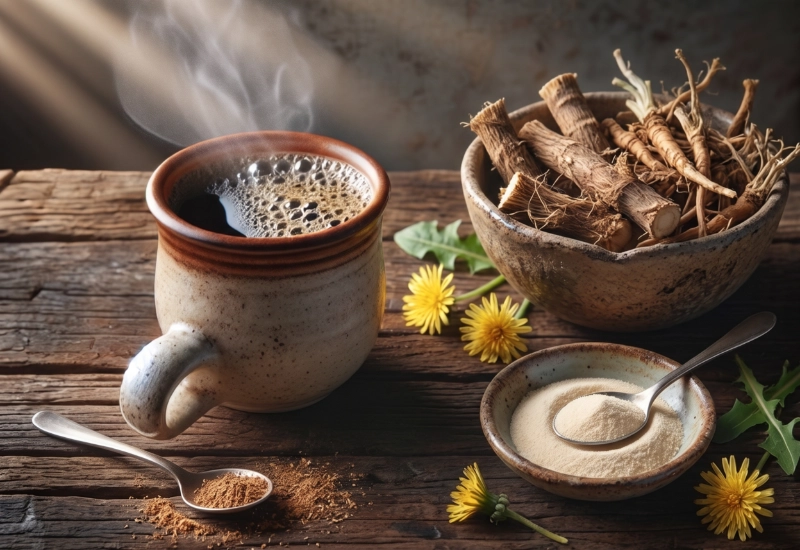
Chicory Root Coffee
- Chicory root coffee is the classic coffee substitute. The plant has been used medicinally since ancient times, but roasting the root as a coffee stand-in took off in 18th- and 19th-century Europe, and later in New Orleans.
- It’s made by roasting and grinding the chicory root, then brewing it like coffee.
- The taste is woody and bitter, with a nutty, caramel-like sweetness underneath. It’s more bitter than coffee and thinner in body.
- It’s a good source of inulin.
- You can drink it on its own, with milk, or mixed with regular coffee to cut the caffeine.
Yerba Mate
Yerba mate is a caffeinated tea made from the leaves of a South American holly, and it’s the everyday drink of Argentina, Uruguay, Paraguay and southern Brazil. It tastes grassy, bitter and sometimes smoky. It’s nothing like coffee, but it does the same job.
- Antioxidants: Mate is rich in polyphenols, similar to green tea.
- Caffeine: A cup typically has somewhere between a third and half of the caffeine in a cup of coffee, depending on how strong you make it. Some people find it gives a smoother lift, though that’s anecdotal.
- Focus: Like any caffeine source, it helps with alertness and concentration.
In South America, mate is a social drink. One gourd is passed around a group, refilled with hot water by the person serving, and shared in turn.
It’s traditionally drunk from a hollowed gourd, also called a mate, through a metal straw with a built-in filter (the bombilla). The gourd is filled with dry leaves and topped up with hot but not boiling water, around 160–180°F, and refilled many times.
One caution: some studies have linked drinking mate very hot, over long periods, to a higher risk of esophageal cancer. Letting it cool a little is sensible.
Matcha
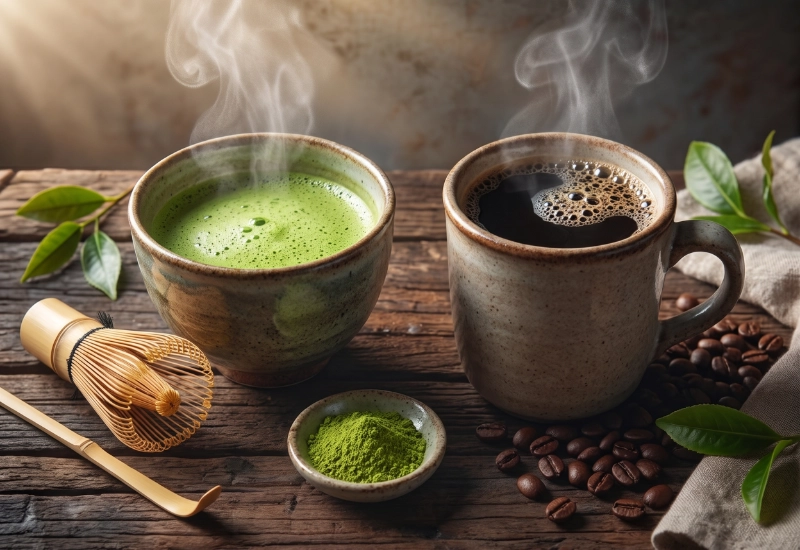
Matcha is green tea that’s been ground into a fine powder and whisked into water or milk, so you drink the whole leaf. It comes from Japan, where it’s at the center of the traditional tea ceremony, and it’s now a café staple worldwide. It tastes grassy and a little sweet, with some bitterness if it’s made too hot or too strong. A cup has caffeine, typically less than coffee, along with L-theanine, an amino acid that many people say takes the edge off the caffeine. It’s a good switch if you want a gentler start to the day rather than no caffeine at all.
The Ritual of Coffee Substitutes
Exploring the Rituals Around Coffee Alternatives
A big part of why coffee is hard to give up is the routine: the grinding, the brewing, the first cup. Many coffee alternatives come with routines of their own, and keeping some kind of ritual makes the switch easier.
- Tradition: Some of these drinks carry centuries of tradition, from Japanese tea ceremonies to shared mate gourds in South America.
- Smell and taste: Roasted dandelion has an earthy smell, carob drinks are chocolatey, and chicory smells close to coffee. Smell is a big part of what makes a morning drink satisfying.
- Preparation: Brewing barley coffee in a moka pot, whisking matcha, or frothing milk for a turmeric latte gives you a few minutes of routine, which is a lot of what people miss about coffee.
- Sharing: A chicory café au lait or a pot of herbal coffee works just as well as coffee for sitting down with someone.
- History: Many substitutes became common in hard times, during blockades, wars and rationing, when coffee was scarce. Some, like New Orleans chicory coffee, stayed popular long after.
Brewing and Consumption Methods
Most coffee substitutes brew with equipment you already own. A few practical notes:
Brewing Techniques
- Steeping or simmering: Roasted roots release more flavor when simmered for 10 minutes or so in a saucepan than when steeped briefly. Teas and herbal blends just need steeping.
- Drip coffee makers: Ground chicory and grain coffees work fine in a drip machine. Use a little less than you would for coffee, since chicory in particular is strong.
- French press: Probably the easiest method for root and grain blends. Steep for 5 minutes, then press.
Serving Styles
- Iced: Chicory and grain coffees cold brew well. Steep overnight in the fridge and serve over ice with milk.
- Lattes: Nearly all of these drinks taste better with steamed or frothed milk, and a dash of cinnamon or vanilla.
- Your own mix: Try mixing ingredients: chicory with cocoa, barley with carob, or a half-and-half with regular coffee while you cut back.
Where to Start
If you want something that tastes like coffee, start with chicory or a roasted herbal blend, and make it with milk. If you want a lift with less caffeine, try matcha or mate. If you mainly miss the ritual, pick whatever you like the taste of and give it a proper routine. Whichever you choose, give it a week or two before you decide: almost everything tastes better once you stop comparing it with coffee.